
In recent years, research has shown that there are several limitations with BMI alone when it comes to assessing adiposity quantity, distribution, as well as the risk of developing various diseases in connection with obesity. In 2025, a commission of researchers and experts published new criteria for the diagnosis of obesity in the journal The Lancet Diabetes & Endocrinology, where they highlighted that BMI alone is not a reliable measurement to establish diagnosis.
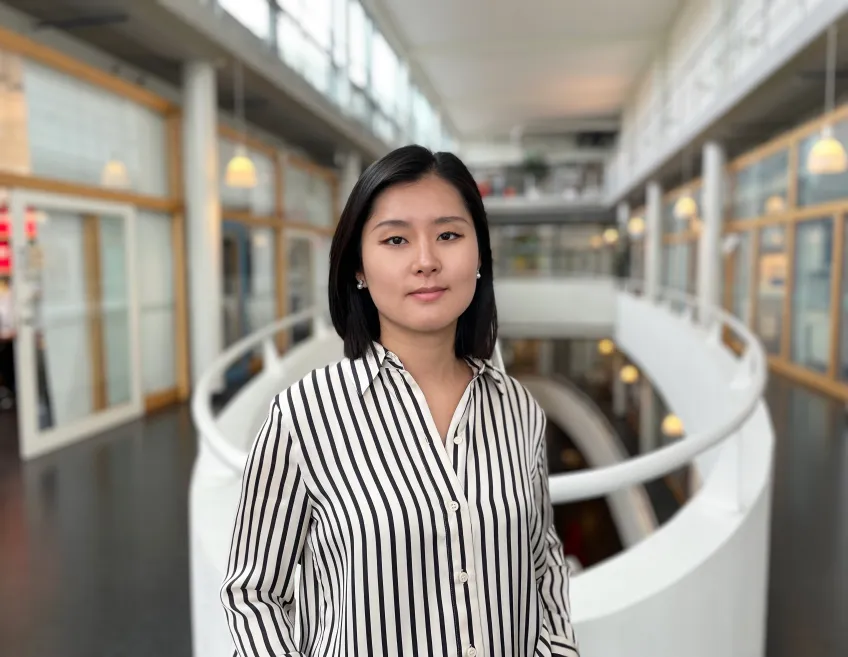
A new study by researchers at Lund University and AstraZeneca provides increased evidence for including more parameters than BMI in the diagnosis of obesity. The study, which is published in the scientific journal eBioMedicine, is part of a data-driven project in precision medicine by Sophie Gunnarsson, employed by AstraZeneca and an industrial PhD student at Lund University Diabetes Centre.
“Obesity is increasingly recognised as a disease, but BMI is often used alone when diagnosing obesity without considering broader health. The method has several limitations, and our study provides new evidence that integrating body fat percentage and waist circumference captures risk dimensions missed by BMI alone,” says Sophie Gunnarsson.
Five risk groups

The research team analysed data from 489,311 participants in the UK Biobank study. The participants were followed for a median of 13 years, and the researchers used both body fat percentage and waist circumference to group the individuals into five risk categories and assessed their risk for developing 3P-MACE (cardiovascular death, nonfatal myocardial infarction, or nonfatal stroke), type 2 diabetes, and chronic kidney disease. Group 1 had no risk for these outcomes and was used as a reference group, whereas the risk increased for each of the other groups and was highest among participants in group 5 (see info box).
During the follow-up time, 24,778 individuals of all participants in the study experienced cardiovascular events, 30,376 were diagnosed with type 2 diabetes, and 14,906 experienced chronic kidney disease. Compared to group 1, who had a healthy adiposity profile, group 5 had over ninefold higher risk for type 2 diabetes, twofold for chronic kidney disease, and 64 percent higher risk for cardiovascular events.
The classification system also identified a significant portion of individuals at high risk of these outcomes without BMI-defined obesity. Some individuals had an adverse adiposity profile despite having a normal BMI, and had a 45 percent higher risk of cardiovascular events, 58 percent higher risk of chronic kidney disease, and over four times the risk of type 2 diabetes compared to those with healthy adiposity profiles.
“Our analyses show that combining body fat percentage and waist circumference when screening for obesity can help us identify individuals at high risk of developing obesity-related diseases that may be missed by using BMI alone. The findings may help improve risk stratification as well as prioritisation for lifestyle interventions, anti-obesity therapies, and weight loss surgery,” says Sophie Gunnarsson.
Indvidualised treatment
A limitation of the study is that it has been conducted on a population where a majority of the participants are of European origin. Diabetes researcher Rashmi Prasad, one of the lead authors of the study, is active in a research group at Lund University Diabetes Centre and has conducted previous research focused on how individuals with diabetes can be stratified into different subgroups. She is the main supervisor of Sophie Gunnarsson’s doctoral project in data-driven life science.
“I think that our new study is a fantastic example of how researchers in academia and industry can collaborate and hopefully contribute with new knowledge that may help identify individuals who are at elevated risk of obesity-related diseases. We are already planning to carry out studies where we investigate whether the classification of individuals with obesity can be applied on other population groups. Long-term, we hope that our research will lead to individualised treatment of obesity and prevent related diseases in high-risk individuals,” says Rashmi Prasad, associate professor of genetics and diabetes at Lund University.