
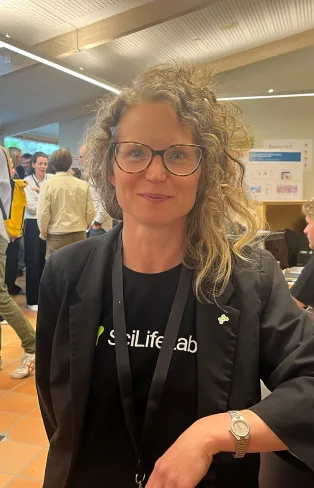
Sophie Hellstrand, coordinator at SciLifeLab Lund and her colleagues Julia Bräunig, deputy head of unit, and Tina Catela Ivkovic, head of unit at the Centre for Translational Genomics (CTG) in Lund organized the kick-off that brought together 150 participants.
The meeting featured keynote speakers who shared their perspectives on the current state and future directions of single-cell and spatial technologies. Participants also gained insights into the technologies and expertise available across the Nordic partner institutions. In addition, the meeting highlighted a range of technology development projects, showcasing the strength and creativity within the Nordic region.
“We are delighted to launch this new Nordic network, and we are especially pleased to have brought together so many representatives from across the Nordic countries here in Lund. We hope that the NASSA network will promote future collaborations, scientific excellence, and technological innovation across the Nordic countries”, says Sophie Hellstrand.
How is this collaboration supposed to work in practice? Will researchers in Lund be able to send samples to Finland and Denmark for analysis?
“Yes, the goal is to have an overview of single-cell and spatial technologies available within the partner countries and that researchers are able to send samples to them”, explains Tina Catela Ivkovic.

What’s the next step after the kick-off?
“The next step is to map the existing capabilities in the field of single-cell and spatial applications at partner sites, then also broader within the partner countries. Identify areas for collaboration, and potential joint projects - methodology focused, educational initiatives, data management harmonization and others, says Tina Catela Ivkovic.