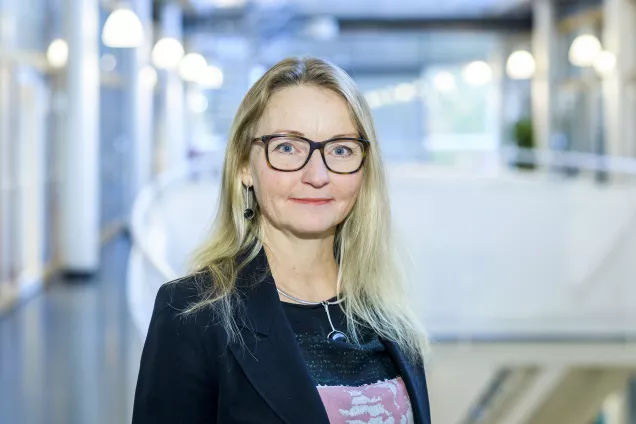

One of the new projects will investigate whether it is possible to develop individualised treatment strategies for people with type 2 diabetes. The project EPIPREDIA is led by diabetes researcher Charlotte Ling at Lund University and is awarded SEK ten million from the European Partnership for Personalised Medicine (EP PerMed) over the next three years.
Research has shown that certain people with type 2 diabetes do not respond well to metformin, which is a common treatment for people with the disease. A previous study by Charlotte Ling’s research group found that a combination of epigenetic biomarkers can predict which individuals will benefit from the drug, and which are likely to suffer side-effects.
“Our new study will include a larger number of people from several cohorts. We expect to find more clinically reliable biomarkers which hopefully can provide people with type 2 diabetes an individualised treatment, improve their cardiovascular protection, and reduce mortality,” says Charlotte Ling, professor of diabetes and epigenetics at Lund University Diabetes Centre.
International collaboration
The international research team aims to develop different biomarkers for different types of therapies given to people with type 2 diabetes. There are currently no approved biomarkers used to predict how people with type 2 diabetes will respond to different types of treatments of the disease.
The project involves partners from Lund University, University of Navarra in Spain, and Aarhus University in Denmark. The population studies ANDIS, ANDiU and DD2 are an important element of the research being conducted within EPIPREDIA. ANDIS in Skåne county and ANDiU in Uppsala are two Swedish population studies, including people with diabetes, which have been established as part of the strategic research area EXODIAB. DD2 is a type 2 diabetes cohort in Denmark.
Allan Vaag, research group leader at LUDC and coordinator of the strategic research area EXODIAB at Lund University, will carry out clinical research as part of EPIPREDIA.
“The research grant gives LUDC and EXODIAB the possibility to take a leading role in an international collaboration within precision medicine. This project would not have been possible without the collaboration between researchers in Sweden and Denmark and the three population studies from both countries,” says Allan Vaag, professor of endocrinology at Lund University.
Diabetes and dementia
NeuroSync is another project within precision medicine which receives support over the next three years. The project is led by Fariba Ahmadizar, assistant professor of diabetes precision medicine at Amsterdam University Medical Centre, and receives about EUR 1,5 million in total funding from JPND (the EU Joint Programme – Neurodegenerative Disease Research). The consortium represents leading researchers within Alzheimer’s disease, metabolic disease, and public health across Europe and Turkey. Paul Franks at Lund University is looking forward to being part of this large research collaboration.
“There are many experts in relevant aspects of diabetes research and neurocognitive disease at Lund University. Collaboration with these investigators will compliment my team’s own strengths, helping establish LUDC as a key partner in this project. The consortium has many highly accomplished investigators, so I will also learn from them about their scientific disciplines,” says Paul Franks, professor of genetic epidemiology at LUDC.
Type 2 diabetes is a known risk factor for dementia, but mechanisms linking the body’s impaired ability to regulate blood sugar levels to disease progression in Alzheimer’s disease are poorly understood. Paul Franks’s research group has expertise in diabetes physiology, genetics and causal inference, which will help the consortium investigate how glucose dysregulation accelerates dementia progression. The aim of the project is to clarify how metabolic factors interact with genetics, lifestyle factors, and psychosocial factors and to translate these insights into personalised interventions for people with dementia.
“At the end of this project we hope to have established powerful precision prediction models to help determine a person’s risk of cognitive decline conditional on glucose dysregulation. Ideally, such models will help determine who is at highest risk and how best to interrupt the disease process,” says Paul Franks.